
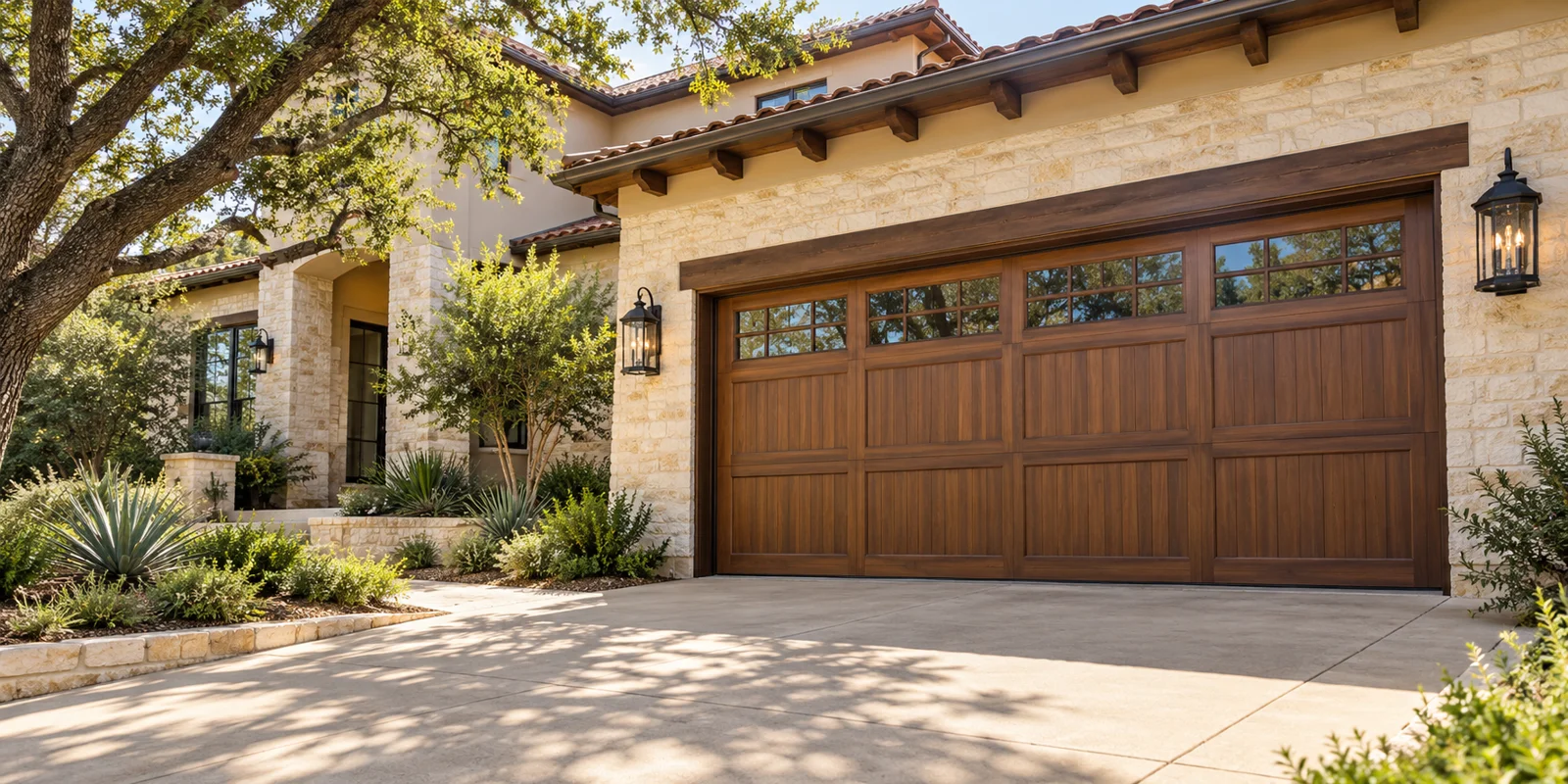
For help arranging garage door repair in San Antonio, call with the door position and a short description. This guide helps you prepare observations and questions for the actual equipment at your property.
Identify where the gap is
A gap at the floor, along a side jamb, or above the opening may involve different weather seals. Observe the closed door from a safe position and note visible light, cracked material, or a section that no longer contacts the surrounding surface. Avoid reaching beneath a moving door. A weather-seal request should describe where the problem is instead of assuming every gap needs a new bottom strip.
Bottom, perimeter, and threshold seals
A bottom seal attaches to the door, a perimeter seal follows the frame, and a threshold product sits at the floor. These products serve different locations. Replacing one does not automatically correct a gap elsewhere. The door's retainer design also affects which bottom-seal profile fits. Ask the supplier or provider to confirm compatibility with the actual door and retainer rather than purchase solely by the width of the opening.
Check condition beyond the rubber strip
A visible gap may accompany a damaged retainer, distorted panel, uneven floor, or a door that does not close correctly. Tell the provider about scraping, uneven movement, or recent impact damage. A thicker seal should not be used to conceal a mechanical closing problem. If the door is crooked or unstable, arrange a repair assessment before treating the gap as routine weatherstripping work.
Prepare information for the estimate
Have the door model, location of the gap, and a safe-distance photo ready when available. State whether the old material is cracked, crushed, missing, or loose. Ask whether the estimate includes the seal, retainer work, removal, installation, and final checks. An out-of-level floor can change the options. Do not assume that a general-purpose strip shown online is the quoted product.
Keep lifting hardware out of the task
Replacing weather material should not become an experiment with the lifting system. Do not loosen bottom brackets, cable attachments, spring hardware, or tracks to gain access. A provider should determine how the door will be supported and approached safely. Manufacturer instructions for a particular seal system matter. If the installation requires unfamiliar restraint or door-positioning steps, have a qualified company handle it.
Check the result without changing opener force
After installation, ask the provider to check the door's operation and the contact along the intended sealing surface. A new seal that interferes with closing needs assessment; do not increase opener force to push through it. Keep the installed product information and care instructions. A seal helps manage gaps but is not a guarantee against flooding, pests, heat, or every form of wind-driven water.
Plan related maintenance
For a San Antonio property, mention where dust or water is entering and whether it began after a door or driveway change. Include the seal condition in the regular maintenance record. If the door also shakes, scrapes, or makes a new sound, describe those symptoms together. Ask the service company to separate weather-seal work from any unrelated proposed repair so you can approve a clear scope.
Connect the Next Check
If closing behavior also changes, record which controls work using the wireless-control checks. If debris or scraping is present, distinguish sealing work from safe track cleaning before deciding on the scope.
If the issue needs an assessment, explore the related service options and return to the main San Antonio repair page to compare the wider service scope. The provider confirms coverage, availability, and pricing.